
Impact of Diesel-Contaminated Soil on the Growth of Phaseolus vulgaris as a Test Crop
-
Abayomi Samuel Ayesa


Department of Biological Sciences, Bamidele Olumilua University of Education, Science and Technology, Ikere, Ekiti, Nigeria
Adedoyin Morenikeji Yusuf
Department of Biological Sciences, Bamidele Olumilua University of Education, Science and Technology, Ikere, Ekiti, Nigeria
Isaac Iseoluwa Ajayi
Department of Biological Sciences, Bamidele Olumilua University of Education, Science and Technology, Ikere, Ekiti, Nigeria
Tolulope Olumide Ajewole
Department of Plant Science and Biotechnology, Federal University Oye-Ekiti, Nigeria
Taiwo Oluwatobiloba Ayodele
Department of Biological Sciences, Bamidele Olumilua University of Education, Science and Technology, Ikere, Ekiti, Nigeria
Opeyemi Saheed Kolawole
Federal University Kashere, Gombe, Nigeria
Boluwatife Oluwaferanmi Omoniyi
Department of Biological Sciences, Bamidele Olumilua University of Education, Science and Technology, Ikere, Ekiti, Nigeria
Tolulope Olaseeni Bamigboye
Federal University of Agriculture, Abeokuta, Ogun State, Nigeria
Hammed Adeyemi AdeoyeDepartment of Biological Sciences, Bamidele Olumilua University of Education, Science and Technology, Ikere, Ekiti, Nigeria
| Received 02 Jan, 2026 |
Accepted 20 Jul, 2026 |
Published 10 Aug, 2026 |
Background and Objective: The proliferation of diesel contamination in soils is increasing at an alarming rate, posing threats to crop productivity. This study examined the effect of diesel-simulated polluted soil on the growth of Phaseolus vulgaris L. Materials and Methods: Thirty polythene pots, each containing 5 kg of surface soil, were arranged in a factorial combination of five treatment levels of diesel contamination (0, 10, 20, 30, and 40 g w/w), designated as P1, P2, P3, P4, and P5, respectively. Three seeds of P. vulgaris were sown per pot. Growth parameters, including plant height, leaf count, shoot length, root length, and biomass (fresh and dry weights of root and shoot), were measured 4 weeks after emergence (WAE). Experiments were conducted in triplicate (n = 3), results reported as Mean±SE, and analyzed using SPSS 16.0 with Duncan’s Multiple Range Test at p<0.05. Results: Plants grown on highly contaminated soils (P5) exhibited reduced growth, with measurements of plant height (11.7 cm), leaf count (7.0), root length (0.5 cm), and shoot length (11.2 cm), which were lower than all other treatments. Biomass parameters followed the same decreasing trend with increasing diesel concentration. Significant differences were observed among treatments (P = 0.005). Conclusion: The poor performance of P. vulgaris on diesel-contaminated soils may be attributed to restricted water uptake by roots. The control treatment (P1) showed the best growth. These findings highlight the need for careful diesel handling and prompt spill management, as diesel-impacted soils can reduce agricultural productivity, potentially affecting food security and national income.
| Copyright © 2026 Ayesa et al. This is an open-access article distributed under the Creative Commons Attribution License, which permits unrestricted use, distribution, and reproduction in any medium, provided the original work is properly cited. |
INTRODUCTION
Oil spillage is one of the contentious issues in Nigeria, especially in the contamination of soil. Simulated-polluted soil with crude oil products, especially diesel, are currently a problem in Nigeria1. Environmental pollution is a global issue and formed an adverse effect on land and water and has health hazards to human, animals, plants and ecosystem2,3. Environmental pollution from oil activities in a major oil producing country as Nigeria is inevitable4. As previously stated5, failure of equipment, leakages from pipelines, operational errors are major cause of crude oil (diesel) spill. Many of the oil facilities and operations are located within sensitive habitats including areas vital to fish breeding, sea turtle nesting, mangroves and rainforests6. Soil is one of the most important natural resources for food production globally and major geochemical sink of pollutants.
Crude product constitutes majorly to cause of environmental pollution7. Diesel is a product from crude oil8, processing and distribution of petroleum hydrocarbon and use of petroleum products leads to the contamination of the environment. Crude oil has been the engine of Nigeria economy for decadest9. Nigeria is one of the established nations dealing with diesel exportation of different kinds, such as bonny light10. Various activities in diesel exploration, exploitation, storage and transportation has led to spillage of oil to the environment11. Diesel and heavy metals cause harmful effects on the environment. Diesel-contaminated soils poses a serious threat to organisms, endanger human health, promoting the extinction of various plant species and reducing their productivity12.
Phaseolus vulgaris L., is one of the most important directly consumed food legume in the world. It has a tremendous variability (>40,000 varieties). Among major food crop, it has one of the highest levels of variation in growth habit, seed characteristics (size, shape, colour), maturity, and adaptation. It belongs to the family Fabaceae, the crop has edible leaves often used in soups preparation as well as the high protein content of the seeds, which makes it a valuable food for domestic consumption and as export crop13,14. Beans are also one of the best non-meat sources of iron, providing 23-30% of the daily recommended levels15 from a single serving. Consumption of beans is high mostly because they are a relatively inexpensive food. For the poor of the world, they are a means of keeping malnutrition at bay16.
Exposure of plants to diesel and heavy metal poisoning has been reported to produce Reactive Oxygen Species (ROS) and other free radicals which induce oxidative stress and cause lipid peroxidation17. Even at an early stage, it can cause a reduction in cell proliferation and growth. Various researchers have reported activation of lipid peroxidation in plants exposed to different pollutants18. Several plant species have also been shown to have elevated peroxidase activities in response to increased pollutant concentrations19. Petroleum oil pollution usually results in damage to the soil microorganisms and plants, together with an increase in soil organic carbon, and reduction in soil nitrates and phosphorus, thus imposing a condition that impairs oil degradation in the soil20,21.
It is crystal clear that the Niger Delta area of Nigeria experiences rising oil spillage and gas flaring. In view of this, the soil ecosystem has been disturbed, while rivers and farmlands are not excluded. The level of famine, drought, and poverty has increased in areas experiencing this menace of oil spillage. Hence, the need for the prevention of ecosystem degradation. The purpose of this study is to determine effect of diesel pollution of P. vulgaris germination and growth rate with reference to the effect on the biochemical characteristics of beans. The objective of this study were to investigate the performance of P. vulgaris grown on diesel contaminated soil, investigate the effect of diesel-contaminated soil on the biomass of the cultivated beans., determine the viability of P.vulgaris grown on diesel-contaminated soil and determine the tolerance of different concentration of diesel-contaminated soil on P. vulgaris.
MATERIALS AND METHODS
Study area: The study was conducted in the Screen House of Bamidele Olumilua University of Education, Science and Technology, Ikere, Ekiti in the South-Western part of Nigeria. It is located within Latitude 7°29‘42.0”N and Longitude 5°10’25.3”E. The research study was carried out between July and August, 2024.
Experimental design: The experiment was conducted in a Screen House of Bamidele Olumilua University of Science, Education and Technology, Ikere Ekiti, Nigeria in accordance with the modified method described by Adewole and Aboyeji. The soil samples were subjected to five treatments with three replicates in a complete randomized design.
Collection of seed and soil: Bulk surface soil samples (0-15 cm) were collected from an area in the University, air-dried for three days, sieved using 2 mm sieve and analyzed using standard methods. Bean seeds suitable for planting were also collected from the nearby market.
Contamination of soil samples: Twenty polythene pots with drainage holes at the bottom, each containing 5 kg of surface soil, were randomly placed in Screen House using factorial combination of five treatment levels (0, 10, 20, 30 and 40 g) of diesel and designated P1, P2, P3, P4 and P5, respectively. The soil samples were put inside planting bags, homogenized by stirring using a glass rod, wetted with distilled water and allowed to equilibrate for three days.
Seedling: Three seeds of kidney beans were planted in diesel polluted soil per plot. The bean stands were regularly watered throughout the growing stage. The beans plants were thinned to two stands per pot at two weeks after planting (WAP). The thinned stands were retained inside the pots from which they were removed so as to put back into the soil what might have been taken up by the plant within the first two weeks of growth.
Measurement of gowth parameters: Fortnightly, growth parameters of beans such as plant height and leaf count were measured till 28 days when the experiment was terminated. After termination, the root and shoot length and weight of the plants were carried out using thread and ruler and weighing balance of all 20 samples, respectively. The roots were separated from the plant and then measurement was taken. After the weight of the fresh plant was carried out, it was then oven dried for 48 hrs at 80°C in order to carry out the dry weight of the samples.
Statistical analysis: Each experiment was conducted in triplicate (n = 3). Results were expressed as Mean±Standard error. Data were analyzed using SPSS version 16.0. Heavy metal concentrations in control and experimental groups were compared using Duncan’s Multiple Range Test at a significance level of p<0.05.
RESULTS
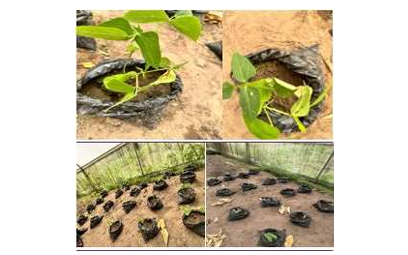
Plant height: The effect of diesel simulated polluted soil on the growth of Phaseolus vulgaris for a period of 28 days were studied on weekly basis (Table 1). Figure 1 shows the effect of diesel simulated polluted soil on the growth performance of Phaseolus vulgaris. The highest value recorded for plot height in week 1 was in Phaseolus vulgaris grown on P1 (8.4 cm) followed by P2 (6.7 cm) and the least plot height was recorded for P3 (6.2 cm) (Table 1). Likewise week 2, P1 had the highest plot height (16.7 cm) and the least value was recorded in P5 with (9.3 cm) (Table 1). For week 3, P1 had the highest plant height (19.7 cm) and the least value was recorded in P5 with (10.2 cm). In week 4, P1 had the highest plant height (22.2 cm) and the least value was recorded in P5 with (11.7 cm). The plant height showed significant differences along the columns at p = 0.5 (Table 1).
Average fresh weight: The effect of diesel simulated polluted soil on the fresh weight and dry weight of P. vulgaris for period of 28 days studied per plant pot (Table 2). The highest value recorded for fresh root and shoot weight was in phoseolus vulgaris grown on P1 (1.7 g) and P1 (31.9 g) and the least value for fresh root and shoot weight was recorded for P5 (0.2) and P5 (2.1) (Table 2).The highest value recorded for dry root and shoot weight was in phoseolus vulgaris grown on P1 (1.1 g) and P1 (18.23 g) and the least plot for dry root and shoot weight was recorded for P5 (0.01 g) and P5 (0.5 g) (Table 2).
|
| Table 1: | Effect of different concentration of diesel contaminated soil on plant height | |||
| Pots | Week 1 | Week 2 | Week 3 | Week 4 |
| P1 | 8.4d | 16.7e | 19.7e | 22.2e |
| P2 | 6.7c | 12.7d | 14.9d | 17.6d |
| P3 | 6.2a | 12.1c | 13.9c | 15.6c |
| P4 | 6.3ab | 11.7b | 11.8b | 12.2ab |
| P5 | 6.3ab | 9.3a | 10.2a | 11.7a |
| P1: Soil contaminated with 0 g of diesel with control, P2: Soil contaminated with 10 g of diesel, P3: Soil contaminated with 20 g of diesel, P4: Soil contaminated with 30 g of diesel, P5: Soil contaminated with 40 g of diesel and Means of same letter showed no significant differences at p = 0.05 | ||||
| Table 2: | Effect of different concentration of diesel contaminated soil on average fresh weight (g) of all plant samples in each pots respectively | |||
| Pots | FRW (g) | FSW (g) | DRW (g) | DSW (g) |
| Pot 1 | 1.7d | 31.9e | 1.1d | 18.23e |
| Pot 2 | 0.6c | 9.0d | 0.12c | 1.6d |
| Pot 3 | 0.4b | 6.4c | 0.04b | 1.2c |
| Pot 4 | 0.2a | 2.9b | 0.04b | 0.6ab |
| Pot 5 | 0.2a | 2.1a | 0.01a | 0.5a |
| P1: Soil contaminated with 0 g of diesel with control, P2: Soil contaminated with 10 g of diesel, P3: Soil contaminated with 20 g of diesel, P4: Soil contaminated with 30 g of diesel, P5: Soil contaminated with 40 g of diesel. Means of same letter showed no significant differences at p = 0.05, FRW: Fresh root weight, FSW: Fresh shoot weight, DRW: Dry root weight and DSW: Dry shoot weight | ||||
| Table 3: | Effect of different concentration of diesel contaminated soil on the root and shoot length | |||
| Pots | Root length (cm) | Shoot length (cm) |
| Pot 1 | 1.7e | 20.5e |
| Pot 2 | 1.3d | 16.3d |
| Pot 3 | 0.8c | 14.8c |
| Pot 4 | 0.6ab | 11.6ab |
| Pot 5 | 0.5a | 11.2a |
| P1: Soil contaminated with 0 g of diesel with control; P2: Soil contaminated with 10 g of diesel, P3: Soil contaminated with 20 g of diesel; P4: Soil contaminated with 30 g of diesel, P5: Soil contaminated with 40 g of diesel and Means of same letter showed no significant differences at p = 0.05 | ||
Root and shoot length: The effect of different concentration of diesel contaminated soil on the root and shoot length of P. vulgaris studied per plant pots was presented in Table 3. P1 had the highest root and shoot length of 1.7 and 20.5 cm, while the lowest value was recorded in P5 with 0.5 and 11.2 cm, respectively (Table 3) The plant height showed significant differences along the columns at p = 0.5 (Table 3).
| Table 4: | Effect of different concentration of diesel contaminated soil on the number of leaves seen on plant on different pots | |||
| Pots | Week 1 | Week 2 | Week 3 | Week 4 |
| Pot 1 | 6c | 16c | 21d | 24d |
| Pot 2 | 4b | 8b | 16c | 14c |
| Pot 3 | 4b | 7ab | 13ab | 12b |
| Pot 4 | 3a | 6a | 13ab | 7a |
| Pot 5 | 3a | 6a | 12a | 7a |
| P1: Soil contaminated with 0 g of diesel with control, P2: Soil contaminated with 10 g of diesel, P3: Soil contaminated with 20 g of diesel, P4: Soil contaminated with 30 g of diesel, P5: Soil contaminated with 40 g of diesel and Means of same letter showed no significant differences at p = 0.05 | ||||
Leaf number: The effect of diesel simulated polluted soil on the number of leaves of P. vulgaris for period of 28 days was presented in Table 4. The highest value recorded for plot number of leaves in week 1 was in P. vulgaris grown on P1 (6) followed by P2 (4) and the least plot number of leaves was recorded for P5 (3) (Table 4). Likewise week 2, P1 had the highest number of leaves (16) and the least value was recorded in P4 and P5 with (6) (Table 4). For week 3, P1 had the highest number of leave (21) and the least value was recorded in P5 with (12). In week 4, P1 had the highest number of leaves (24) and the least value was recorded in P4 and P5 with (7) (Table 4).
DISCUSSION
The present study investigated effects of diesel contaminated soil on the growth of P. vulgaris. The study found that diesel contamination significantly reduces plant height, root length, and leaf count. This aligns with studies by Ekundayo et al.22 and Okonokhua et al.23 who reported that petroleum hydrocarbon contamination inhibits plant growth by creating anoxic conditions in the soil and reducing nutrient availability. The significant reduction in plant height, biomass, and root development suggests that diesel contamination can severely hinder crop productivity22. This implies potential food insecurity in regions where agricultural lands are affected by petroleum pollution. Farmers in such areas may experience reduced yields and income losses.
Diesel contamination adversely affected biomass accumulation. The observed reductions in fresh and dry weights suggest that diesel negatively impacts the physiological processes of the plant, such as photosynthesis and nutrient uptake. The decrease in fresh and dry weights observed in the study is consistent with findings24 showed that crude oil pollution and spent engine oil adversely impacted various plant parameters, including total leaf area, plant height, stem girth, total biomass and crop yield in Vigna unguiculata. Adenipekun et al.25, who noted reduced biomass production in plants grown in oil-contaminated soils. These studies attributed the reductions to toxic effects on plant metabolic activities, such as photosynthesis and nutrient uptake.
Root length was significantly reduced in diesel-treated pots. The control group had the longest roots, while P5 had the shortest roots. The number of leaves per plant was significantly higher in the control group compared to the treated pots. Diesel contamination reduced leaf production, particularly at higher concentrations. The stunted root growth in diesel-contaminated soils indicates that diesel contamination disrupts natural plant cycles such as flowering and fruiting, as well as having a toxic effect on root elongation. This could be due to the hydrophobic nature of diesel, which creates a barrier to water and nutrient absorption. Stunted root growth in the study is supported by Adesina and Adelasoye26, who found that petroleum products increase the levels of certain elements, such as iron and zinc, to toxic levels, which inhibit root elongation and subsequent crop performance. Kayode et al.27 also noted that oil contamination alters soil structure, reducing water and oxygen penetration, thereby impairing root growth.
In the study, P. vulgaris grown in diesel contaminated soil showed sign of pest attack on the leaf. Symptoms like yellowing leaves and increased pest susceptibility suggest oxidative stress and weakened plant immunity, likely caused by toxic hydrocarbons and heavy metals in the diesel. Yellowing of leaves and pest susceptibility were observed in the study are indicative of oxidative stress caused by the reactive oxygen species (ROS) generated in diesel-contaminated soils. This is consistent with findings by Kaur et al.18, who noted that ROS cause lipid per-oxidation and protein oxidation, leading to visible stress symptoms in plants.
The findings align with Osibemhe et al.28, who noted that diesel contamination reduces soil fertility by altering its physical and chemical properties leading to higher daily maximum surface temperatures in hydrocarbon-contaminated soils compared to uncontaminated areas. Similarly, Ossai et al.,29 highlighted that oil contamination reduces microbial activity and organic matter decomposition, further compounding nutrient deficiencies in plants. Diesel contamination alters soil properties, such as aeration, nutrient availability, and water retention, rendering the soil unsuitable for agriculture. Over time, this could lead to land degradation, requiring costly remediation efforts or abandonment of farmland. The presence of toxic hydrocarbons and heavy metals in diesel-contaminated soil poses potential risks to human health30. Crops grown in such soils may bioaccumulate harmful substances, which could enter the food chain, impacting consumers’ health.
The results clearly indicate a dose-dependent relationship, with higher diesel concentrations causing more severe effects on all growth parameters. The dose-dependent relationship observed in the study, where higher diesel concentrations caused more severe effects, agrees with findings by Masakorala et al.31. Similarly, Sagaya et al.32 reported a significant oil-dose dependent reduction in the germination, growth, fruiting and Leaf Anatomy of Abelmoschus caillei. These studies emphasized that the toxic effects of diesel contamination increase with concentration due to higher hydrocarbon content and associated toxicity. The study therefore emphasizes the need for stricter regulations on the handling, storage, and transportation of petroleum products to minimize accidental spills.
CONCLUSION
The study investigated the impact of diesel contamination on the growth and development of P. vulgaris (common bean). Diesel contamination in soil occurs through spills and leakages, often in agricultural and industrial areas, introducing hydrocarbons and toxic compounds that affect soil quality and plant health. Therefore, there is a need to carefully transport diesel, and when a container carrying the diesel breaks down, spillage of diesel oil should be totally avoided. More so, quick response to oil spillage during an accident should be taken seriously. This also sounds a serious warning to oil pipeline vandals to desist from such act owing to the fact that diesel impacted soil may reduce agricultural produce, which will in turn lead to shortage of food and reduced national income. The findings highlight the urgency for governments and environmental agencies to enforce stricter policies on petroleum handling. Communities near oil facilities should also be educated on the risks of improper handling and disposal of petroleum products. The study underscores the need for further research into cost-effective and sustainable remediation strategies for diesel-contaminated soils.
SIGNIFICANCE STATEMENT
This study demonstrates that diesel-contaminated soil significantly inhibits the growth and biomass of Phaseolus vulgaris, highlighting its sensitivity to petroleum pollution. The findings emphasize the environmental risk of diesel spills on agricultural productivity and the need for strict pollution control and soil remediation strategies.
REFERENCES
- Yadav, S.K., 2010. Heavy metals toxicity in plants: An overview on the role of glutathione and phytochelatins in heavy metal stress tolerance of plants. S. Afr. J. Bot., 76: 167-179.
- Al-Dulaimi, R.I., N.B. Ismail and M.H. Ibrahim, 2012. The effect of industrial wastewater in seed growth rate: A review. Int. J. Sci. Res. Publ., 2.
- Wu, G., Z. Miao, S. Shao, K. Jiang, Y. Geng, D. Li and H. Liu, 2018. Evaluating the construction efficiencies of urban wastewater transportation and treatment capacity: Evidence from 70 megacities in China. Resour. Conserv. Recycl., 128: 373-381.
- Agbogidi, O.M. and O.F. Eshegbeyi, 2006. Performance of Dacryodes edulis (Don. G. Lam H.J.) seeds and seedlings in a crude oil contaminated soil. J. Sustainable For., 22: 1-13.
- den Biggelaar, C., R. Lal, K. Wiebe, H. Eswaran, V. Breneman and P. Reich, 2003. The global impact of soil erosion on productivity∗: II: Effects on crop yields and production over time. Adv. Agron., 81: 49-95.
- Shi, B., J. Meng, T. Wang, Q. Li, Q. Zhang and G. Su, 2024. The main strategies for soil pollution apportionment: A review of the numerical methods. J. Environ. Sci., 136: 95-109.
- Nwaogu, L.A., C.S. Alisi and O.A. Ojiako, 2008. Studies on the nutritional and phytochemical properties of Persea americana seed. Bio-Research, 6: 320-322.
- Agbogidi, O.M., S.O. Akparobi and P.G. Eruotor, 2006. Yields of maize (Zea mays L.) as affected by crude oil contaminated soil. Am. J. Plant Physiol., 1: 193-198.
- Bartholomew, D.C., U.C. Orumie, C.P. Obite, B.I. Duru and F.C. Akanno, 2021. Modeling the Nigerian bonny light crude oil price: The power of fuzzy time series. Open J. Modell. Simul., 9: 370-390.
- Omolade, A., H. Ngalawa and A. Kutu, 2019. Crude oil price shocks and macroeconomic performance in Africa’s oil-producing countries. Cogent Econ. Finance, 7.
- Agbogidi, O.M., P.G. Eruotor and S.O. Akparobi, 2007. Effects of crude oil levels on the growth of maize (Zea mays L.). Am. J. Food Technol., 2: 529-535.
- Mottaghi, S., O. Bahmani and V.A. Pak, 2022. Phytoremediation of diesel contaminated soil using urban wastewater and its effect on soil concentration and plant growth. Water Supply, 22: 8104-8119.
- Etukudo, M.M. and B. Onu, 2021. Developmental and morphological indices of Phaseolus vulgaris L. and soil physico-chemical properties during serial flooding in Bayelsa State, Nigeria. Niger. J. Pharm. Appl. Sci. Res., 10: 55-60.
- Mbosowo, M.E., M.I.R. Eneni and J.O. Ifeoma, 2015. Physiological parameters of Phaseolus vulgaris L. in diesel oil polluted soil and amelioration treatment. Int. J. Basic Sci. Technol., 1: 19-22.
- Chehelpar, N., H.R. Tohidi-Moghadam and F. Ghoushchi, 2016. Hexaconazole foliar application alleviates water deficit effects in common bean. Pesqui. Agropecu. Trop., 46: 301-310.
- WHO, 1998. Quality Control Method for Medicinal Plant Material. World Health Organization, Geneva, Switzerland, ISBN: 9241545100, Pages: 122.
- Blokhina, O.B., K.V. Fagerstedt and T.V. Chirkova, 1999. Relationship between lipid peroxidation and anoxia tolerance in a range of species during post anoxic reaeration. Physiol. Plant, 105: 625-632.
- Kaur, S., M.S. Gill, K. Gupta and K.C. Manchanda, 2013. Effect of occupation on lipid peroxidation and antioxidant status in coal-fired thermal plant workers. Int. J. Appl. Basic Med. Res., 3: 93-97.
- Jouili, H. and E. El Ferjani, 2003. Changes in antioxidant and lignifying enzyme activities in sunflower roots (Helianthus annuus L.) stressed with copper excess. C.R. Biol., 326: 639-644.
- Okolo, J.C., E.N. Amadi and C.T.I. Odu, 2005. Effects of soil treatments containing poultry manure on crude oil degradation in a sandy loam soil. Appl. Ecol. Environ. Res., 3: 47-53.
- Adedokun, O.M. and A.E. Ataga, 2007. Effects of amendments and bioaugumentation of soil polluted with crude oil, automotive gasoline oil, and spent engine oil on the growth of cowpea (Vigna ungiculata L. Walp). Sci. Res. Essays, 2: 147-149.
- Ekundayo, E.O., T.O. Emede and D.I. Osayande, 2001. Effects of crude oil spillage on growth and yield of maize (Zea mays L.) in soils of midwestern Nigeria. Plant Foods Hum. Nutr., 56: 313-324.
- Okonokhua, B.O., B. Ikhajiagbe, G.O. Anoliefo and T.O. Emede, 2007. The effects of spent engine oil on soil properties and growth of maize (Zea mays L.). J. Appl. Sci. Environ. Manage., 11: 147-152.
- Kayode, J., O. Olowoyo and A. Oyedeji, 2009. The effects of used engine oil pollution on the growth and early seedling performance of Vigna uniguiculata and Zea mays. Res. J. Soil Biol., 1: 15-19.
- Adenipekun, C.O., O.J. Oyetunji and L.S. Kassim, 2008. Effect of spent engine oil on the growth parameters and chlorophyll content of Corchorus olitorius Linn. Environmentalist, 28: 446-450.
- Adesina, G.O. and K.A. Adelasoye, 2014. Effect of crude oil pollution on heavy metal contents, microbial population in soil, and maize and cowpea growth. Agric. Sci., 5: 43-50.
- Kayode, J., A.A. Oyedeji and O. Olowoyo, 2009. Evaluation of the effects of pollution with spent lubricating oil on the physical and chemical properties of soil. Pac. J. Sci. Technol., 10: 387-391.
- Osibemhe, M., E.S. Danjuma and U.E. Ubi, 2025. Effect of crude oil contaminated soil on the growth, development and nutritional composition of maize (Zea mays L.,). Sahel J. Life Sci. FUDMA, 3: 120-131.
- Ossai, I.C., A. Ahmed, A. Hassan and F.S. Hamid, 2020. Remediation of soil and water contaminated with petroleum hydrocarbon: A review. Environ. Technol. Innovation, 17.
- Edema, N.E., 2012. Effects of Crude Oil Contaminated Water on the Environment. In: Crude Oil Emulsions-Composition Stability and Characterization, Abdel-Raouf, M.E.S. (Ed.). InTech Publishing, New York, USA, ISBN: 978-953-51-4336-9, pp: 169-180.
- Masakorala, K., J. Yao, R. Chandankere, H. Yuan, H. Liu, C. Yu and M. Cai, 2013. Effects of petroleum hydrocarbon contaminated soil on germination, metabolism and early growth of green gram, Vigna radiata L. Bull. Environ. Contam. Toxicol., 91: 224-230.
- Sagaya, A., A.A. Abdulrahaman, P.O. Oluwanisola and S.B. Tsoho, 2023. Effects of soil pollution on the germination, growth, fruiting and leaf anatomy of Abelmoschus caillei (A Chev.) stevels malvaceae. Sci. World J., 18: 64-70
How to Cite this paper?
APA-7 Style
Ayesa,
A.S., Yusuf,
A.M., Ajayi,
I.I., Ajewole,
T.O., Ayodele,
T.O., Kolawole,
O.S., Omoniyi,
B.O., Bamigboye,
T.O., Adeoye,
H.A. (2026). Impact of Diesel-Contaminated Soil on the Growth of Phaseolus vulgaris as a Test Crop. Research Journal of Botany, 21(1), 1-8. https://doi.org/10.3923/rjb.2026.01.08
ACS Style
Ayesa,
A.S.; Yusuf,
A.M.; Ajayi,
I.I.; Ajewole,
T.O.; Ayodele,
T.O.; Kolawole,
O.S.; Omoniyi,
B.O.; Bamigboye,
T.O.; Adeoye,
H.A. Impact of Diesel-Contaminated Soil on the Growth of Phaseolus vulgaris as a Test Crop. Res. J. Bot 2026, 21, 1-8. https://doi.org/10.3923/rjb.2026.01.08
AMA Style
Ayesa
AS, Yusuf
AM, Ajayi
II, Ajewole
TO, Ayodele
TO, Kolawole
OS, Omoniyi
BO, Bamigboye
TO, Adeoye
HA. Impact of Diesel-Contaminated Soil on the Growth of Phaseolus vulgaris as a Test Crop. Research Journal of Botany. 2026; 21(1): 1-8. https://doi.org/10.3923/rjb.2026.01.08
Chicago/Turabian Style
Ayesa, Abayomi, Samuel, Adedoyin Morenikeji Yusuf, Isaac Iseoluwa Ajayi, Tolulope Olumide Ajewole, Taiwo Oluwatobiloba Ayodele, Opeyemi Saheed Kolawole, Boluwatife Oluwaferanmi Omoniyi, Tolulope Olaseeni Bamigboye, and Hammed Adeyemi Adeoye.
2026. "Impact of Diesel-Contaminated Soil on the Growth of Phaseolus vulgaris as a Test Crop" Research Journal of Botany 21, no. 1: 1-8. https://doi.org/10.3923/rjb.2026.01.08

This work is licensed under a Creative Commons Attribution 4.0 International License.
